
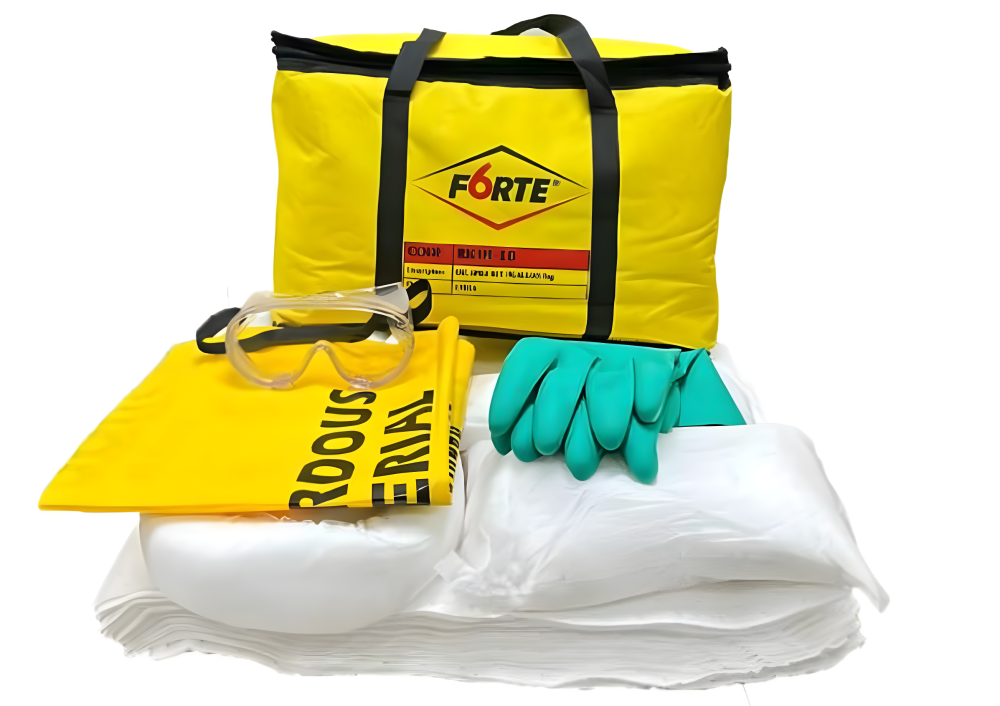
- The 10 Gallon Chemical Spill Kit is a set of equipment and supplies designed to contain and clean up small to medium chemical spills.
- BRAND: FORTE
- Typical Contents:
- Absorbents: Used to absorb spilled chemicals. Common types include:
- Absorbent Pads: Flat sheets used for general spills (0.8 L) 41 g, Size: 40 x 50 cm = 30 pieces.
- Absorbent Pads: Larger absorbent pad-shaped materials for larger spills or those in hard-to-reach areas, Size: 20 x 30 cm, 2.5 liters = 2 pieces.
- Absorbent Socks: Long, narrow absorbent materials used to contain spills along edges or in gutters, Size: 3 x 48 cm, 6 liters = 2 pieces.
- Universal Absorbents: Designed to absorb a wide range of chemicals.
- Personal Protective Equipment (PPE): To protect the responder from exposure to hazardous chemicals:
- Gloves: Chemical-resistant gloves (such as nitrile or butyl rubber).
- Goggles: Safety glasses to protect eyes from splashes.
- Apron: Chemical-resistant apron to protect clothing.
- Waste Containment and Disposal:
- Waste Disposal Bags: Heavy-duty bags to collect and dispose of contaminated materials.
- Warning Signs and Tape: To warn others of the danger of spills.
- Other Accessories:
- Scoops and Spoons: To transfer absorbent materials.
- Utility Knife: To cut open bags and other materials.
- Instruction Manual: Provides instructions on how to use the spill kit.
- Typical Uses:
- Laboratory: To clean up accidental spills of chemicals used in experiments.
- Industrial Facilities: To handle spills of chemicals used in manufacturing processes.
- Warehouses: To handle spills of chemicals stored in drums or containers.
- Construction Sites: To clean up spills of paints, solvents, and other chemicals.
- Maintenance Sections: To respond to spills in a variety of environments.
- Important Considerations:
- Chemical Compatibility: Ensure that the absorbent materials in your spill kit are compatible with the types of chemicals likely to be spilled in your specific environment.
- Training: Proper training is essential for anyone using a chemical spill kit. This should include:
- Risk Assessment
- Spill Response Procedures
- Personal Protective Equipment Selection and Use
- Waste Disposal Regulations
- Regular Inspection and Maintenance: Regularly inspect your spill kit to ensure that all components are present and in good condition. Replace any worn or damaged items immediately.
- Regulatory Compliance: Ensure that your spill kit meets all applicable local, state, and federal regulations.
- By having a well-stocked, properly maintained, and readily available chemical spill kit, you can reduce the risks associated with chemical spills and ensure a quick and effective cleanup.