
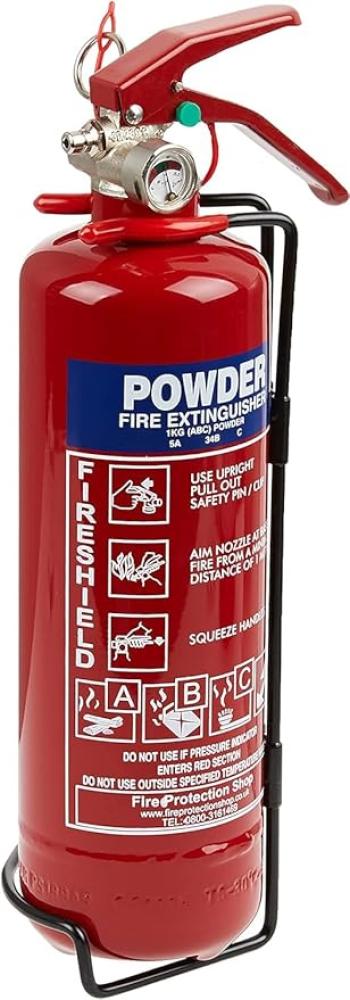
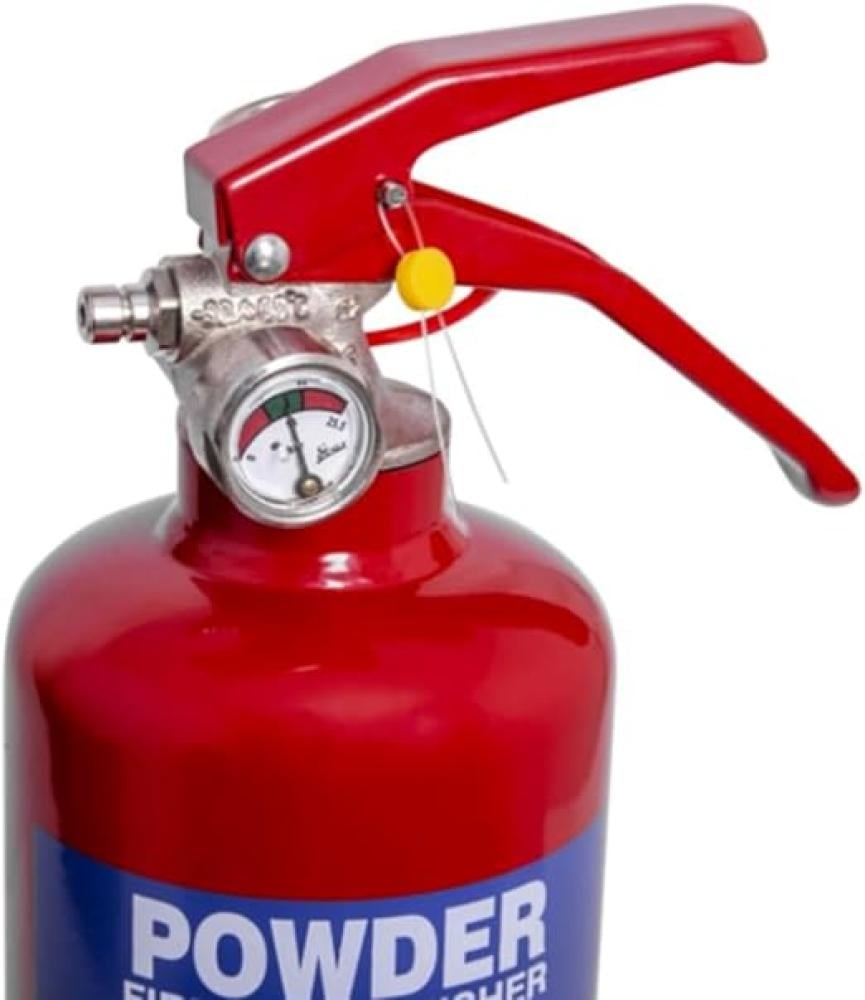
- Dry Chemical Powders Are Important Fire-Fighting Agents. The Main Advantage Is The Practical, Immediate Success Of Extinguishing A Fire. Furthermore, One Can Use Dry Powders For Extinguishing Large-Scale Fires, Spillage Fires, And Three-Dimensional Fires.
- Specifications:
- SASO Approved
- Abc Powder Type
- Made In China
- Powder Fire Extinguisher
- Premium Quality
- Cylinder Material:m.s.
- Capacity(Kg):2 Kg
- Fire Rating:1A 34B
- Temperature Range:-30°C To + 60°C
- Minimum Effective Charge Time:8 Sec
- Bulk Range Discharge:2 Mtrs (Minimum)
- Operating Pressure:15 Bar
- Test Pressure:35 Bar
- Expellant:nitrogen
- Safe For Use On Live Electrical Equipment
- Squeeze Grip Operation
- Fully Refillable
- Controlled Discharge
- Key Characteristics:
- Extinguishing Agent: Uses a fine powder, typically ABC dry chemical (Monoammonium Phosphate), though
- some may be BC dry chemical (Sodium Bicarbonate or Potassium Bicarbonate).
- Fire Classes:
- ABC Powder: Effective on Class A (ordinary combustibles like wood and paper), Class B (flammable liquids),
- and Class C (electrical fires). This is the most common type.
- BC Powder: Effective on Class B and Class C fires. Not effective on Class A fires as it doesn't have the capability
- to create a smothering layer on burning solids.
- Mechanism: The powder works by:
- Smothering: Coating the fuel and preventing oxygen from reaching it.
- Interrupting the chemical reaction: The powder particles interfere with the combustion process.
- Non-conductive (for ABC/BC): Safe to use on electrical fires as it doesn't conduct electricity.
- Size and Portability: 2 kg is a relatively small and lightweight size, making it easily portable and manageable
- for most people. It's suitable for:
- Homes
- Cars
- Small offices
- Garages
- Boats
- Operation: Typically operated by:
- Pulling a safety pin.
- Aiming the nozzle at the base of the fire.
- Squeezing the lever to discharge the powder.
- Sweeping the nozzle from side to side at the base of the flames.
- Discharge Time and Range: A 2 kg extinguisher will have a limited discharge time (usually around 8-15
- seconds) and range (typically 2-4 meters), so it's crucial to aim accurately and act quickly.
- Maintenance: Requires regular inspection to ensure the pressure gauge is in the green zone and that there's
- no damage or obstruction. Professional servicing is needed periodically (usually annually or as per local
- regulations).
- Advantages of Dry Powder Extinguishers:
- Versatile (ABC): Effective on multiple fire types.
- Effective on flammable liquids and electrical fires.
- Relatively inexpensive.
- Easy to use.
- How to use a fire extinguisher:
- Aim at the base of the fire: This is crucial for effective suppression.
- Use a sweeping motion: Cover the entire base of the fire.
- Stay upwind: Avoid inhaling the powder.
- Have an escape route: Ensure you can safely retreat if the fire gets larger.
- Consider the environment: Avoid using in confined spaces without proper ventilation or respiratory
- protection due to the inhalation hazard. Be mindful of the residue in sensitive areas.
- Never use on Class F (cooking oil/fat) fires: Dry powder is not suitable for these types of fires and can make
- them worse.